
About GSEIO
Global Seismic Earth Information Observatory
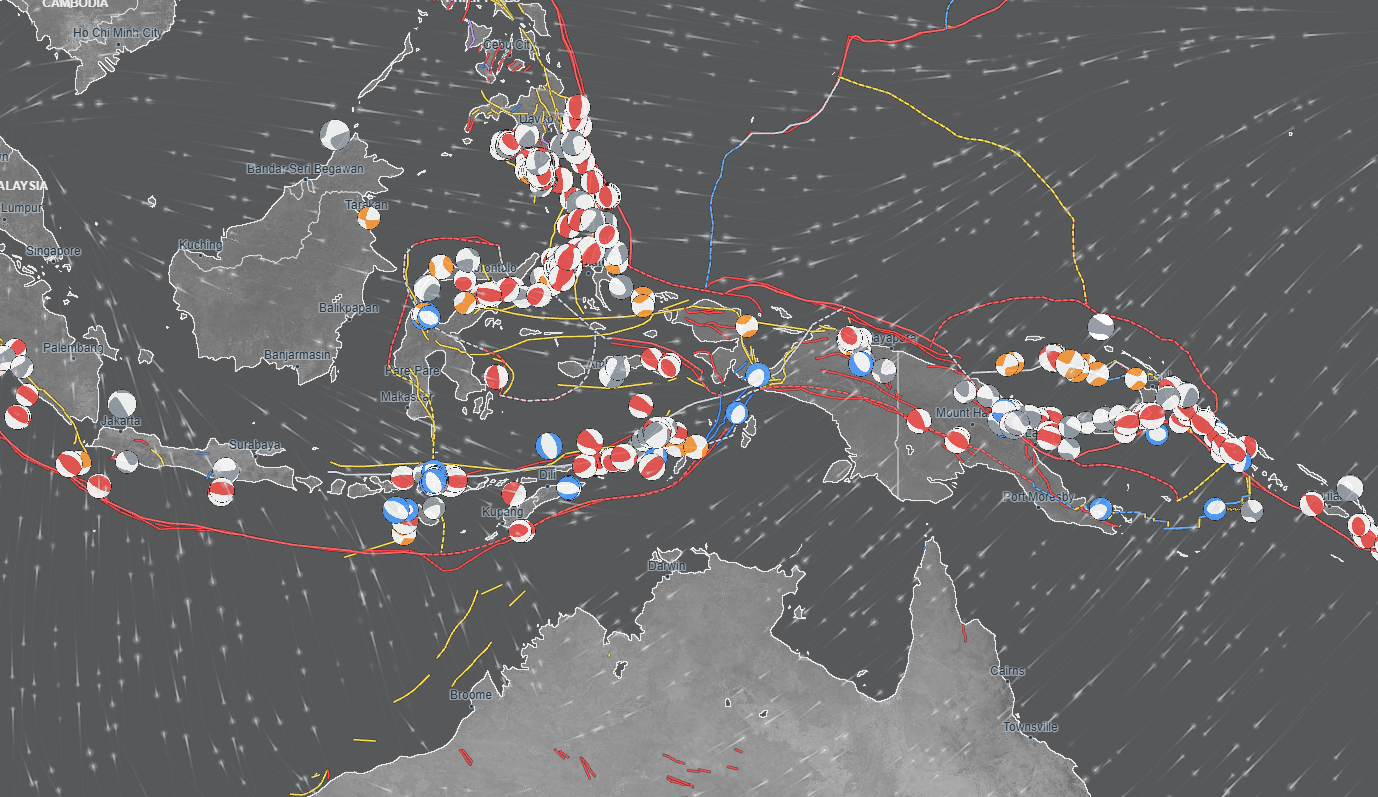
GSEIO (Global Seismic Earth Information Observatory) is a developing scientific information platform dedicated to global earthquake monitoring, physical earthquake forecasting, and the public dissemination of scientific information about seismic activity. The observatory brings together earthquake observations, tectonic information, experimental forecasting models, and statistical forecast evaluations in a unified, publicly accessible environment. Its primary purpose is to make scientifically grounded earthquake information available to everyone — from people seeking information after experiencing an earthquake to researchers investigating the physical processes governing seismic activity.
Earthquake Information as a Public Good
Earthquakes affect communities across the world, often without warning and with potentially devastating consequences. Access to reliable earthquake information should not depend on geographical location, institutional affiliation, or financial resources.
Earthquake information is a public good.
GSEIO is founded on the principle that scientific knowledge about earthquakes, their causes, their consequences, and their potential predictability should be made as accessible and transparent as possible. The observatory integrates information from established international earthquake monitoring organizations with results from experimental physical forecasting models. By connecting observations, scientific interpretation, and forecasting research, GSEIO aims to contribute to a more informed and better-prepared society.
Scientific Mission
Advancing Physical Earthquake Forecasts and Predictions
A central scientific objective of GSEIO is to advance the understanding of earthquake predictability. Earthquakes arise from complex physical processes involving tectonic stress, fault interactions, deformation, and the redistribution of mechanical energy within the Earth's lithosphere. Understanding these processes requires an integrated approach that combines seismology, tectonics, continuum mechanics, and statistical analysis.
GSEIO supports this approach through the LAMBDA Forecasting Information System (LAMBDA-FIS), a scientific research system developed since 2025. LAMBDA-FIS integrates global seismic observations, tectonic structures, physical forecasting models, and statistical methods for evaluating earthquake forecasts. The complete research system includes substantially more models and analytical capabilities than those currently available through the public LAMBDA-FIS Web Viewer. Its experimental forecasting models investigate short-range seismic activity, including forecast horizons of approximately 7–14 days. The scientific objective is to determine whether physically based models can provide measurable predictive information beyond established statistical descriptions of seismicity.
Scientific Transparency
Scientific forecasts acquire value through independent and reproducible evaluation. For this reason, GSEIO aims to publish not only forecasting results, but also information about the methods, input data, forecast dates, uncertainties, and statistical tests associated with those results.
LAMBDA-FIS incorporates statistical forecast evaluation using the Molchan test and Monte Carlo PI-test. These methods investigate whether earthquakes occur in areas assigned higher forecast values more frequently than expected under selected statistical reference models. Where available, GSEIO presents the results of such evaluations alongside the corresponding forecasting models.
Experimental forecasts are not guarantees of future earthquakes. Their statistical significance and practical predictive value must be established through continued testing, particularly using forecasts issued before the events they are intended to predict.
GSEIO does not replace official earthquake monitoring agencies, emergency management organizations, or public warning systems.
Open Scientific Collaboration
Progress in earthquake science depends on the exchange of observations, scientific ideas, methods, and research results. GSEIO draws on publicly accessible scientific information provided by international organizations, including USGS, EMSC, Global CMT, GEM, and other research institutions. Original data providers are acknowledged, and their information remains subject to the applicable conditions of use. The observatory is intended to encourage scientific discussion, reproducible research, and collaboration across disciplines.
The ultimate objective is to advance scientific understanding of earthquakes and contribute to reducing their impact on human life and society.